No products in the cart.
What is a jacketed reactor?
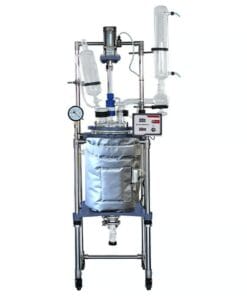
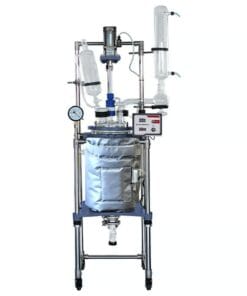
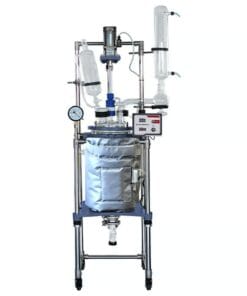
A jacketed reactor, also known as a double walld reactor, consists of an inner vessel (core) that holds. The chemical reactants and a surrounding outer shell (jacket) that circulates a heating or cooling fluid. The purpose of the jacket is to regulate the temperature of the reaction inside the core vessel.
What is the function of jacket in reactor?
In reactors, heating and cooling jackets are used to remove heat from exothermic reactions. Or provide the needd heat required to produce the desird endothermic reactions.
What is the purpose of jacketed vessel?
Jackete vessels can be employd as chemical reactors (to remove the elevatd heat of reaction). Or to reduce the viscosity of high viscous fluids (such as tar). Agitation can be also use in. Further, jackete vessels to improve the homogeneity of the fluid properties (such as temperature or concentration).
How many types of reactor jackets are there?
Types of Jacketed Vessels.
There are three main types of external jacketed heat transfer surfaces: conventional jackets, dimple jackets. Also, and half-pipe coil jackets. In addition, internal coils can be use. Further, to regulate heat transfer, although they are not themselves a type of jacketd vessel.