
No products in the cart.
Drip Tape and Dripline Essentials
Firstly, You’ve probably heard of micro-irrigation that delivers little amounts of water to your beloved plants. Well, driptape irrigation is one such efficient method.
Drip line and tapes have been the product of choice for commercial growers and backyard gardeners for many years. It is economical and practical for watering long, straight-row crops. You can use drip tape above ground, mulche, or burie underground.
Drip Tape vs Drip Line
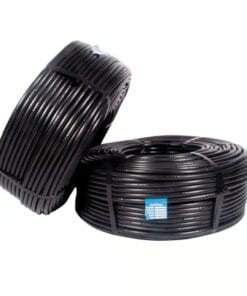
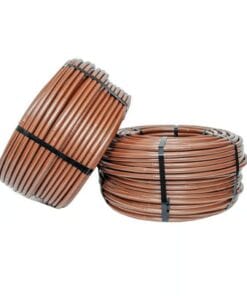
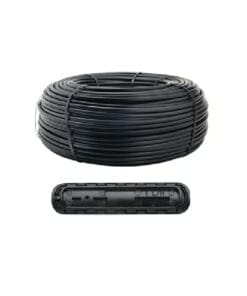
Irrigation dripline and driptape are often mistaken for one another in this industry. Both are very similar, having drip emitters evenly space. And built internally into the pipe. But they are drastically distinct in material and application.
The Drip Tape: These are thin-walle tubes (typically between 0.55-0.3 millimeters thick) that lay flat until pressurize with water. While drip lines are solid, structure lines with a wall thickness of around 0.9-1.2 millimeters.
Drip Lines – These pipes are more durable, allowing them to be use on long term crops. They can also run at much more increase water pressures between 15-60 Psi, compare with drip tape tubing which splits if water pressure exceeds 15 Psi.
Drip Tape For Micro-Irrigation
Drip (aka “dew hose” as it was initially known 60+ years ago) is super versatile as it can be cut to size for use in modest or commercial gardens and provides an eco-friendly way to water and feed your plants.
The natural targete, low-pressure of drip tape irrigation decreases water expenses. And minimizes the risk of plant diseases or issues due to water contact with foliage/stems.
It also lessens soil deterioration and allows rows between plants to dry due to the direct. Efficient application of the watering system.
Where To Use Drip Tape Irrigation
Drip is best utilize in larger gardens with extende. Straight runs and is perfect for providing water directly to trees and shrub roots.
It is also commonly use alongside capillary mats for bottom-water plants grown in containers, and as the tape can be cut to size, it can also be use in raise beds.
NOTE: While it can manage with slightly slante gardens, it is not designe to work on curves, bends, or hills.
Drip Line For Micro-Irrigation
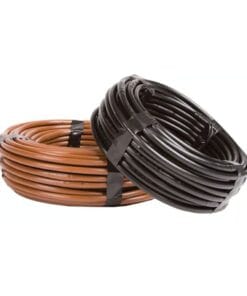
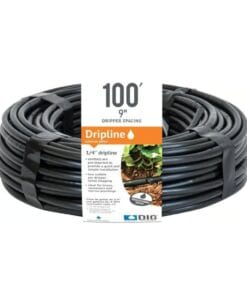
Also, Dripline is often mistaken with soaker hoses, yet as you will see they are very different products. Dripline is similar to driptape in that it has emitters of various emission rates installe at evenly spaced intervals, however, the similarities end there.
Unlike Drip Tape Irrigation, the drip line is limite in length to the same limits as poly tubing of the corresponding size. This means that a ¼” drip line should never have a max run length longer than 30’ in a single run and a ½” drip line should never be longer than 200’ in a single run. Drip Tape and Dripline Essentials
Further, Drip line does have one advantage over drip tape in respect to flexibility. ¼” drip line is reasonably flexible, in fact, it is frequently use to make circles around trees in order to water the entire root system of a tree uniformly.
½” drip line isn’t quite as flexible as a ¼” drip line. It is as flexible as poly tubing, meaning it can take mild turns and bends but not harsh corners or 90-degree angles without the use of an irrigation fitting.
Soaker Hose
The Soaker hoses are a fairly newer invention, and while drip line and drip tape are often referre to as soaker hoses they are actually a product unique unto themselves. Soaker hoses are not compatible with drip irrigation or pressurize systems.
Meanwhile, Soaker are most frequently mad of rubber and other recycle material that is perforate throughout its length to allow water to seep out. In this regard it is similar to other drip irrigation products, however, there are some drawbacks ingraine in its design.
Further, because soaker hoses seep water along the whole length, there is no control over where the water is provide. If your plants are space 6” apart, there is little sense in watering the dirt between them.
Also, soaker hoses are also infamous for seeping more water out of the part of the hose closest to the water source than the ends furthest away. This is because soaker hoses do not work as part of a pressure regulating system. Even if water preservation isn’t a problem, the higher the water bill from waste water is.
Further, one benefit to a soaker hose can be when a long border of bushes requires watering. A soaker hose is good at this aspect as it can be laid along the entire length of a hedge and the perforate format means every part of the hedge will receive water.
However, the concern of uneven water distribution cannot be reduce and parts of the plant’s roots may receive too much water while others may receive too little; this becomes even more apparent on irregular geography.
Soaker hoses, at the end of the day, are among the most elementary form of drip irrigation and other methods would likely see greater success and less waste, but there are situations (such as long hedges) where it can be valuable.
Final Thoughts On Drip Tape Irrigation & Lines
Driptape irrigation kits provide you with a straightforward manner of watering a large number of your garden plants or vegetable crops simultaneously, and its trickle-down approach saves much more water compare with spray or sprinkler irrigation methods.
Drip Irrigation
Price range: $122.00 through $258.00
Price range: $70.00 through $303.00
Drip Irrigation
Price range: $78.00 through $377.00

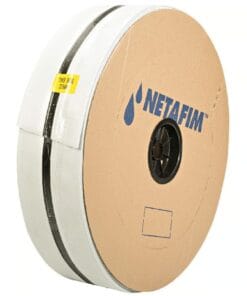
Drip Irrigation
Price range: $431.00 through $1,850.00
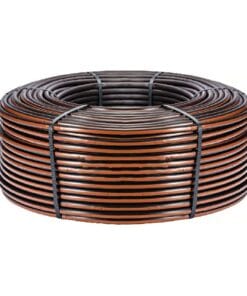
Drip Irrigation
Price range: $18.00 through $446.00
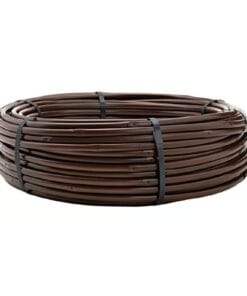
Drip Irrigation
Price range: $17.00 through $396.00
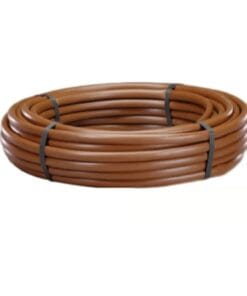
Drip Irrigation
Price range: $16.00 through $327.00
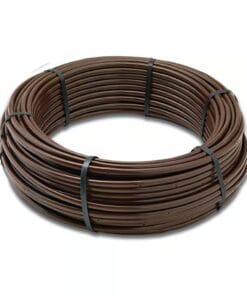
Drip Irrigation
Price range: $44.00 through $231.00
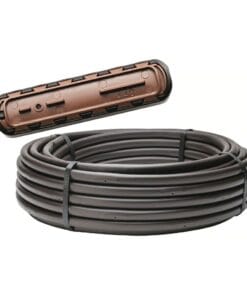
Drip Irrigation
Price range: $139.00 through $570.00
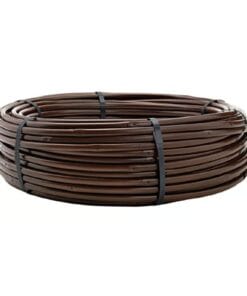
Drip Irrigation
Price range: $89.00 through $433.00
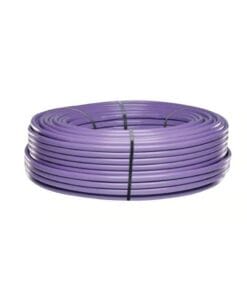
Drip Irrigation
Price range: $93.00 through $455.00
Drip Irrigation
Price range: $171.00 through $497.00