No products in the cart.
All Of The Drip Irrigation Components For Your Entire Garden
What Is Drip Irrigation?
Firstly, Drip line irrigation is a system that delivers water to home landscapes using a drip, spray or stream. An irrigation system keeps roots wet, but not soake, all while using less water.
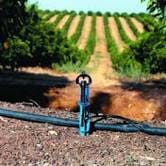
Further, this irrigation involves placing tubing with emitters on the ground along side the plants. The emitters slowly drip water into the soil at the plants roots. Because water levels are kept at an preferre range, plant productivity and quality improve. Also, these systems can be use with pretty much any standard soil type.
What Are The Main Parts of Drip Irrigation?
There are several different types of drip systems with various parts use.
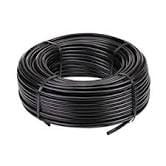
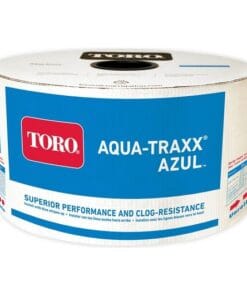
Irrigation Tubing & Dripline
Dripper & Emitters
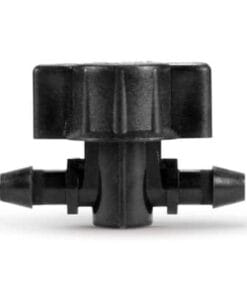
Irrigation Valves
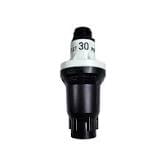
Pressure Regulators
Irrigation Sprinklers & Sprinkler Heads
Irrigation Backflow Preventer Devices
The parts of a drip system include the supply line, valve, pressure regulator, filter, fittings, tubing, and emitters. Backflow valves as well as other backflow devices are also important parts.
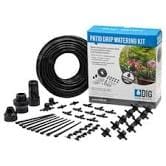
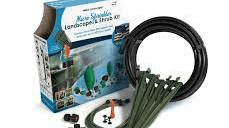
Moreover, there are also drip irrigation kits for all different types of gardens. Kits are an easy way to make sure you have all the parts for your sprinkler or drip system.
Benefits of Drip Systems
Drip systems provide a large number of benefits over other methods:
Stops disease by reducing water contact with the leaves, stems, and fruit of plants.
Allows the rows between plants to remain dry, improving access and stopping weed growth.
Greater efficiency will save you time, money, and water.
Increases efficiency on uneven ground.
Reduces loss of water and nutrients below the root zone.
Drawbacks of Drip Irrigation
High starting investment;
Replacement of drip irrigation parts on the surface
Drip emitters can get clogge
Water management can be difficult
Types of Emitters
Further, emitters are groupe base on their design type and the method they use to control pressure. Some are built into the irrigation pipe or tubing, others attach to it using a barb or threads. The emitter reduces and controls the amount of water.