
No products in the cart.
Nano Bubbles & DO Infusers
Nano Bubbles & DO Infusers Oxygen In Irrigation Water
Firstly, Nanobubbles are one of the smallest known bubble sizes. They are roughly 2500 times smaller than a single grain of salt, or less than 200 nanometers (nm) in diameter.
Secondly, Nanobubbles behave differently from larger bubbles because they’re very small. Also, all of their beneficial attributes stability, surface charge, neutral buoyancy, oxidation, etc.—are the result of their size. These unique features enable nanobubbles to participate in physical, biological, and chemical reactions while also providing the most efficient gas transfer.
What are NanoBubbles?
Meanwhile, Nanobubbles are 70-120 nanometers in size, 2500 times smaller than a single grain of salt. They can be formed using any gas and dissolve in water. Also, due to their size, these bubbles exhibit unique properties that improve numerous physical, chemical, and biological processes.
Further, due to their size and structure, these bubbles possess distinct properties. Additionally, these make them effective at improving water quality, enhancing water treatment processes, and improving productivity in agricultural applications.
Also, Nanobubbles have a strongly negative surface charge. This keeps them stable in liquid and enables them to participate in and stimulate physical, biological, and chemical interactions.
Why NanoBubble Oxygenation Is Key To Optimal Root Zone Health
Furthermore, Root zone health is essential for plant health. Plant health is heavily impacted by water quality, oxygen availability, pathogens, and other environmental factors. Research has shown that high-quality irrigation water with super high dissolve oxygen levels.
Nutrient uptake
Energy generation via ATP production
Plant resilience & stress handling
Photosynthetic Capacity
Water uptake efficiency
Moreover, Root systems generate all their energy via cellular respiration. To respire, root hair cells require a large amount of oxygen from within the particles of the growth medium. Or within the flow of the Deep-Water Culture (DWC) system.
Meanwhile, Low amounts of oxygen favor harmful bacteria. A highly oxygenatd environment, created through the presence of nanobubbles, discourages disease pathogens from growing. Highly oxygenatd water also allows beneficial organisms like mycorrhizae, Bacillus, Trichoderma, and Streptomyces to thrive.
Also, Increasing pure oxygen in a stabilizd and dissolvd form creates ideal growing conditions within the root zone. However, this has been very challenging in the past.
Moleaer NanoBubble Generators
Also, Moleaer’s patented technology injects trillions of nano-sizd gas bubbles into the liquid. This helps to deliver best-in-class gas-to-liquid transfer. Nanobubbles are non-buoyant and chemically active, producing oxidants and reducing surface tension.
Furthermore, these characteristics enable nanobubbles to replace inefficient gas transfer equipment and harmful chemicals with a single, efficient, chemical-free solution.
Lotus NanoBubble Generator
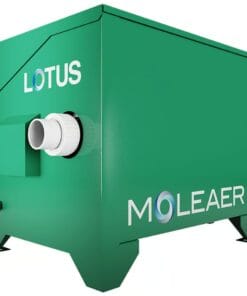
Secondly, the Lotus nanobubble generator easily hooks up with your existing irrigation system or water tank. It helps to circulate water before it’s pumped to your plants. Depending on your tank setup, the Lotus inlet is installe directly into the side of your tank or adjacent manifold pipe.
Additionally, The discharge pipe goes into the top of the tank. By circulating the water back into your tank, the Lotus injects nanobubbles to:
Boost plant and root health
Improve water quality
Suppress pathogenic growth
Reduce biofilm
Further, Improve irrigation water to promote plant growth and reduce inputs with Moleaer’s Lotus patente nanobubble generator. A highly efficient gas technology that converts bulk oxygen into nanobubbles. The bubbles then saturate the irrigation water with high levels of dissolve oxygen.
Also, due to their small size, nanobubbles possess unique properties that improve plant and root health. These improvements include preventing and suppressing diseasing causing pathogens, increasing nutrient uptake efficiency, and enabling plants to better withstand environmental stress. Nano Bubbles & DO Infusers
Neo Nanobubble Generator
Also, Moleaer’s Neo nanobubble generators suppress root disease and promote vigorous growth of resilient crops in agriculture, aquaculture, and more. Moleaer’s Neo nanobubble generators produce efficient water quality solutions in various applications across industries.
Neo Generators for Agriculture
Saturate water with oxygen nanobubbles
Integrate easily with fertigation and climate control systems
Promote beneficial bacteria growth and suppress pathogens
Reduce chemical use or improve chemical performance
Neo Generators for Lakes & Ponds
Reduce chemical use or improve chemical performance
Transfer increased O2 to fish through PPO2 values
Control algae blooms
Neo Generators for Aquaculture
Improve fish and gill health; reduce disease
Improve sanitary conditions and stocking densities
Restore health to the seabed/seafloor
Dissolved Oxygen And Nanobubbles for Aquaculture
Secondly, Devices that produce nanobubbles are becoming increasingly popular in a range of aquaculture operations. There are a growing number of studies supporting their value both in improving production and in reducing the environmental impact.
How Important Is Dissolved Oxygen To Aquatic Life?
Dissolved oxygen is one of the most critical factors limiting stocking density and production yields in aquaculture. Low oxygen levels curtail the health and survival of aquatic organisms while limiting nitrifying bacteria from breaking down organic waste.
Aquaculture operators address this by aerating their farms. They use everything from paddlewheels to airstones, which generate the familiar bubbles we often see in aquariums.
BioTherm Solutions Dissolved Oxygen Infusers
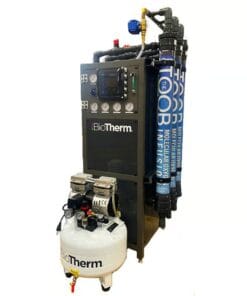
Also, the BioTherm TOOB is a revolutionary, efficient method of increasing the dissolved oxygen in irrigation water. This significantly improves plant health and productivity. The TOOB has an inlet for water and another for pure oxygen. This can come from an oxygen generator or oxygen tanks from a commercial source.
Meanwhile, Oxygen enters the TOOB through long strands of a hollow “mass transfer” fiber. The O2 molecules are forced through tiny holes in the fiber into the surrounding water, saturating it with oxygen. The oxygen remains in stable suspension throughout the irrigation process. Nano Bubbles & DO Infusers
Here, our system dissolves oxygen in water without making bubbles. The efficiency of this manner of mass transfer allows the production of stable liquid streams containing large amounts of dissolvd oxygen. These amounts are normally only seen in laboratory conditions.
Finally, Stable high levels of dissolvd oxygen are achievd with the TOOB. For example, 40-45 ppm is quite simply achievd in irrigation storage tanks. Under normal conditions, 8 ppm is typically the maximum.

$895.00
Price range: $14,500.00 through $16,000.00
Garden Care
$6,000.00

Garden Care